Civil Litigation in Mangalore
Kinds of Civil Litigation
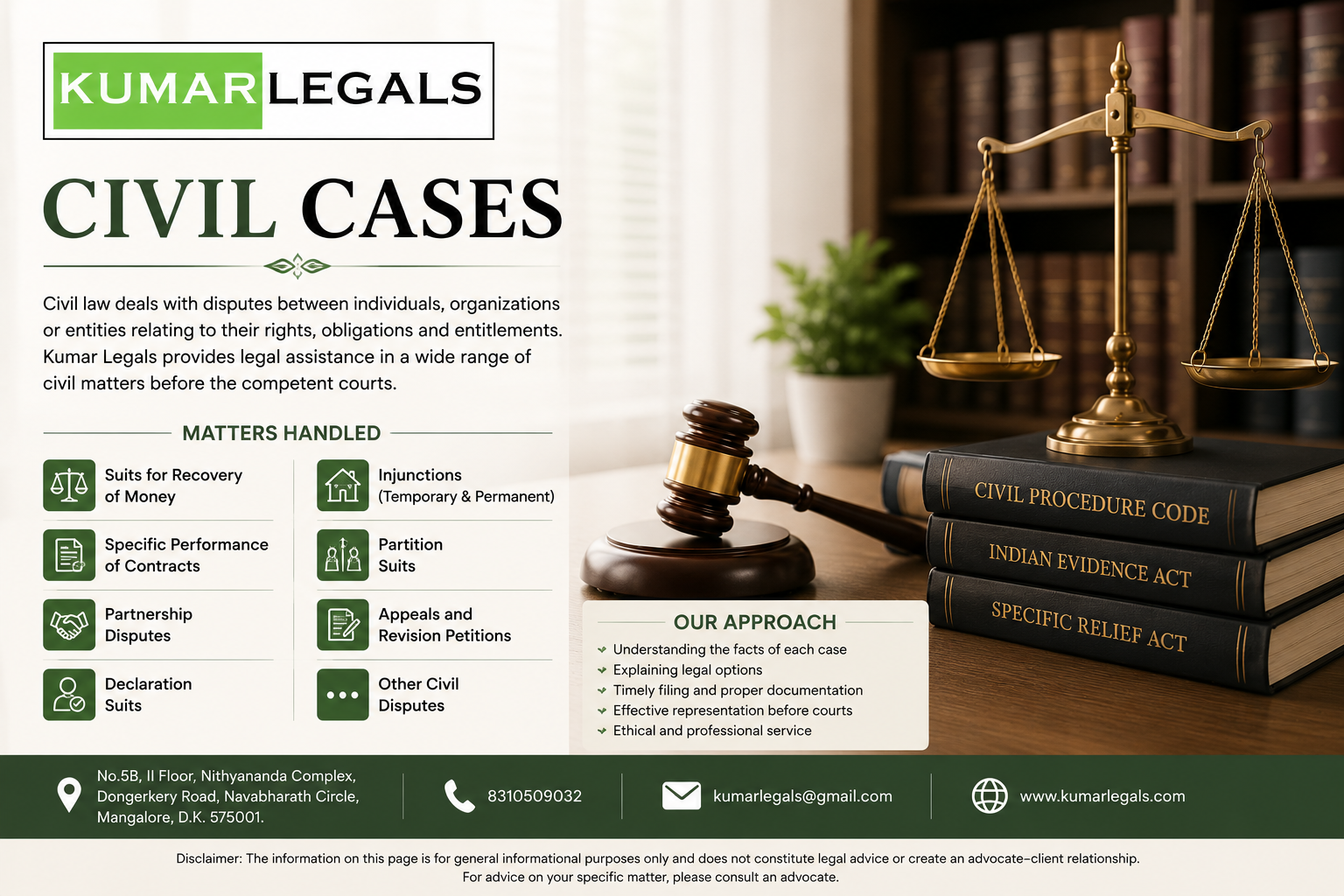
Civil litigation encompasses a broad spectrum of disputes concerning legal rights, obligations, property, contracts, commercial transactions and other civil remedies recognised under Indian law. Depending upon the facts and circumstances of each case, different legal proceedings may be initiated before the competent Civil Court.
The following are some of the principal categories of civil litigation. Each topic is explained separately through dedicated articles to provide a general understanding of the applicable legal principles, procedures and remedies.
Civil Litigation Topics
-
⚖️ What is Civil Litigation?
An overview of civil litigation, the nature of civil disputes and the remedies available before Civil Courts. -
🏛️ Recovery Suits
Proceedings relating to recovery of money arising out of contracts, loans, commercial transactions and other enforceable liabilities. -
🏠 Partition & Separate Possession
Disputes involving division of jointly owned properties among co-owners or family members. -
📜 Property & Title Disputes
Cases involving ownership, title, possession, boundaries and other property-related issues. -
🚫 Temporary Injunctions
Interim orders intended to preserve the subject matter of a dispute pending final adjudication. -
⚖️ Permanent Injunctions
Final relief restraining unlawful interference with legal rights after adjudication. -
📝 Declaration Suits
Proceedings seeking judicial declarations regarding ownership, legal status or enforceable rights. -
🤝 Specific Performance of Contracts
Proceedings seeking enforcement of contractual obligations where monetary compensation alone is inadequate. -
💼 Commercial & Contractual Disputes
Disputes arising from commercial agreements, business transactions and contractual obligations. -
📑 Execution Proceedings
Proceedings initiated for enforcement of judgments and decrees passed by competent Civil Courts.
Related Articles
Each of the above topics is discussed in greater detail through dedicated articles. These articles explain the general legal framework, procedural aspects and commonly asked questions relating to the respective subject matter. They are intended solely for general informational purposes and should not be construed as legal advice.
Divorce & Matrimonial Matters
Legal Assistance May Include
- Mutual Consent Divorce
- Contested Divorce Proceedings
- Child Custody
- Maintenance & Alimony
General Procedure
- Consultation
- Document Review
- Preparation of Petition
- Institution of Proceedings
- Evidence
- Judgment
Criminal Law
Criminal Defence & Criminal Litigation
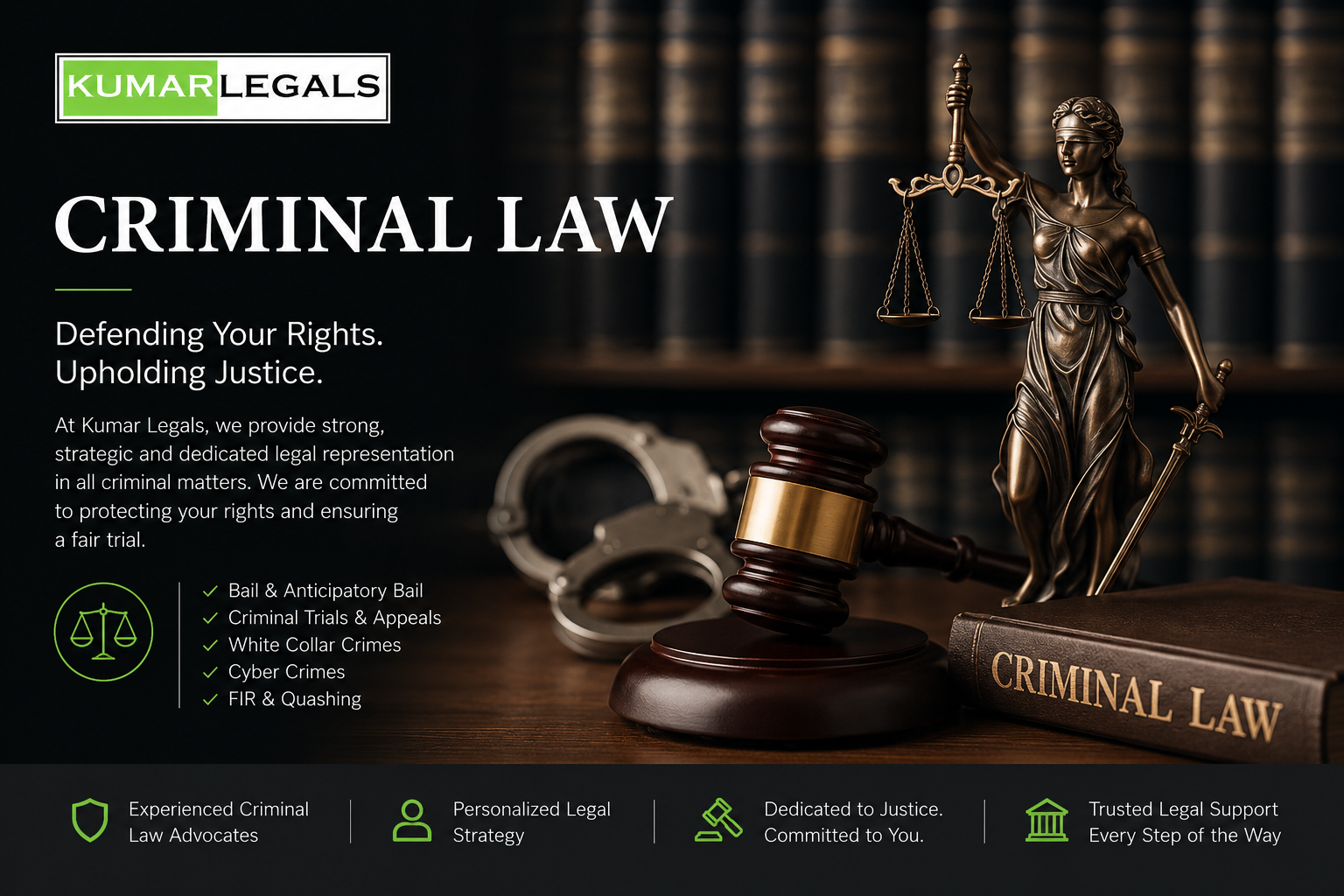
Criminal law deals with offences recognised under Indian law and the procedures governing investigation, prosecution and trial before criminal courts. Criminal proceedings may arise from allegations involving offences against individuals, property, public order, financial transactions or other matters punishable under applicable penal statutes. Every criminal case depends upon its own facts, the available evidence and the applicable legal provisions.
The criminal justice process may involve registration of a First Information Report (FIR), investigation by the police or other competent authorities, filing of a charge sheet, consideration of bail, framing of charges, recording of evidence, examination and cross-examination of witnesses, final arguments and delivery of judgment. Depending upon the nature of the matter, statutory remedies such as appeals or revisions may also be available.
Kumar Legals provides legal assistance in criminal matters before the competent Criminal Courts and other judicial forums in Mangalore and Dakshina Kannada, subject to the facts of each case and the applicable law.
Areas of Criminal Law
The following are common categories of criminal proceedings. Each topic links to a dedicated article explaining the general legal framework, procedure and frequently asked questions.
-
🚔 First Information Report (FIR)
Understanding the purpose of an FIR, the registration process and the rights of individuals during criminal investigations. -
🛡️ Anticipatory Bail
General information regarding anticipatory bail, eligibility and the procedure before the competent court. -
⚖️ Regular Bail
Overview of bail proceedings after arrest, applicable legal principles and factors generally considered by courts. -
📄 Quashing of FIR & Criminal Proceedings
General overview of proceedings before the High Court seeking quashing of criminal cases in appropriate circumstances. -
🏛️ Criminal Trial Procedure
A general explanation of criminal trials, framing of charges, evidence, examination of witnesses and judgment. -
💻 Cyber Crime Offences
General information relating to cyber offences, online frauds, identity theft and offences involving digital technology. -
💰 Financial & Economic Offences
Proceedings involving financial fraud, cheating, criminal breach of trust and other economic offences. -
👩⚖️ Criminal Appeals & Revisions
Overview of statutory remedies available against criminal judgments and orders, subject to applicable law. -
📚 Rights of Accused Persons
General information regarding procedural safeguards, fair trial principles and legal rights recognised under Indian law.
Related Articles
Each of the above topics is discussed separately through detailed articles explaining the applicable legal framework, criminal procedure, judicial process and commonly asked questions. These articles are intended solely for general informational purposes and should not be construed as legal advice or a guarantee of any legal outcome.
Consumer Law
Consumer Protection & Consumer Disputes
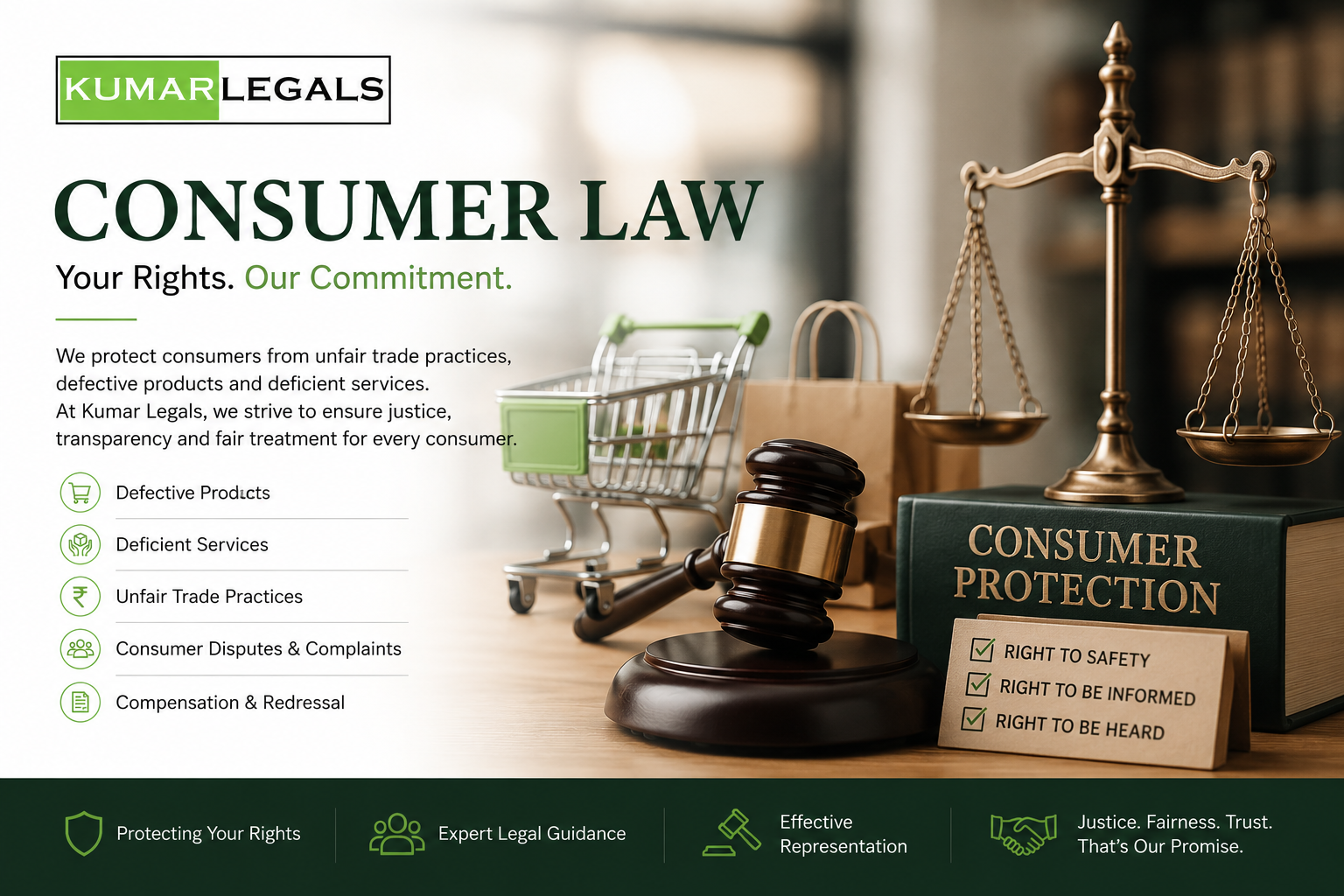
The Consumer Protection Act, 2019 provides legal remedies to consumers against defective goods, deficiency in services, unfair trade practices, misleading advertisements and other recognised consumer grievances. The legislation seeks to safeguard consumer rights by providing an effective mechanism for redressal before the appropriate Consumer Disputes Redressal Commission.
Consumer disputes may arise in relation to banking, insurance, medical services, real estate, education, e-commerce transactions, transport, telecommunications, defective products and numerous other services. Depending upon the facts of each matter, remedies may include replacement, repair, refund, compensation or other reliefs recognised by law.
Kinds of Consumer Disputes
The following are some common categories of consumer disputes. Each topic links to a dedicated article explaining the legal framework, procedure and remedies in greater detail.
-
🛒 How to File a Consumer Complaint
General procedure for instituting consumer complaints before the competent Consumer Commission. -
📦 Defective Goods
Consumer rights where goods suffer from manufacturing defects or fail to meet prescribed standards. -
🏥 Medical Negligence & Consumer Law
General overview of consumer remedies relating to deficiency in medical services where applicable. -
🏠 Real Estate Consumer Disputes
Consumer issues arising from delay in possession, promised amenities and other builder-related disputes. -
🏦 Banking & Financial Service Disputes
Consumer grievances involving banking services, loans, digital transactions and financial institutions. -
🛡️ Insurance Claim Disputes
Issues concerning repudiation, delay or settlement of insurance claims. -
🛍️ E-Commerce Consumer Rights
Consumer protection in online purchases, refunds, cancellations and digital marketplaces. -
📢 Unfair Trade Practices
General information regarding misleading advertisements, false representations and unfair commercial practices. -
💰 Compensation & Reliefs
Overview of the types of reliefs that may be granted by Consumer Commissions depending upon the facts of each case.
Related Articles
Each of the above topics is discussed in detail through dedicated articles covering the legal framework, procedure before Consumer Commissions, relevant provisions of the Consumer Protection Act, 2019 and commonly asked questions. These articles are intended solely for general informational purposes and do not constitute legal advice.
- Defective product complaints
- Service deficiency claims
- Consumer forum representation
- Compensation and refund recovery
Taxation and Compliances in Mangalore
Taxation & Tax Law
Taxation law governs the levy, assessment, collection and recovery of taxes under various Central and State enactments. Individuals, businesses, partnerships, companies and other entities may be required to comply with statutory obligations relating to income tax, goods and services tax (GST), tax registrations, returns, assessments, appeals and other regulatory requirements prescribed by law.
Tax disputes may arise during assessments, audits, investigations, notices issued by statutory authorities, interpretation of tax provisions, eligibility for exemptions, input tax credit, penalties and other compliance-related matters. The appropriate legal remedy depends upon the facts of each case, the applicable legislation and the orders passed by the competent authority.
Kumar Legals provides legal assistance relating to taxation matters before the competent authorities, appellate forums and courts in accordance with applicable law. The information provided on this page is intended solely for general educational purposes and should not be construed as legal or tax advice.
Areas of Taxation Law
Taxation law covers a wide range of compliance requirements and dispute resolution mechanisms. The following topics are explained in greater detail through dedicated articles.
-
💰 Income Tax Law
General overview of income tax provisions, assessments, notices, deductions and statutory obligations. -
🧾 Goods and Services Tax (GST)
General information relating to GST registration, returns, compliance requirements and statutory obligations. -
📄 GST Registration
Understanding eligibility, registration procedures and compliance under the GST regime. -
📨 Income Tax Notices
General guidance on statutory notices issued by the Income Tax Department and the legal process that may follow. -
📊 GST Assessments & Audits
Overview of GST scrutiny, audits, assessments and compliance proceedings. -
📂 Input Tax Credit (ITC)
General information regarding eligibility, restrictions and disputes relating to Input Tax Credit. -
⚖️ Tax Appeals
Overview of appellate remedies available against tax assessments and statutory orders. -
📑 Penalties under Tax Laws
General information regarding statutory penalties, compliance failures and available legal remedies. -
🏢 Business Tax Compliance
General overview of tax compliance obligations applicable to businesses and commercial entities. -
📝 Tax Compliance & Documentation
General information regarding statutory record keeping, filings and documentation required under tax laws.
Related Articles
Each of the above topics is discussed separately through detailed articles explaining the applicable statutory provisions, compliance requirements, appellate remedies and frequently asked questions. These articles are intended solely for general informational purposes and should not be construed as legal or tax advice.

Corporate & Commercial Law
Corporate & Commercial Law
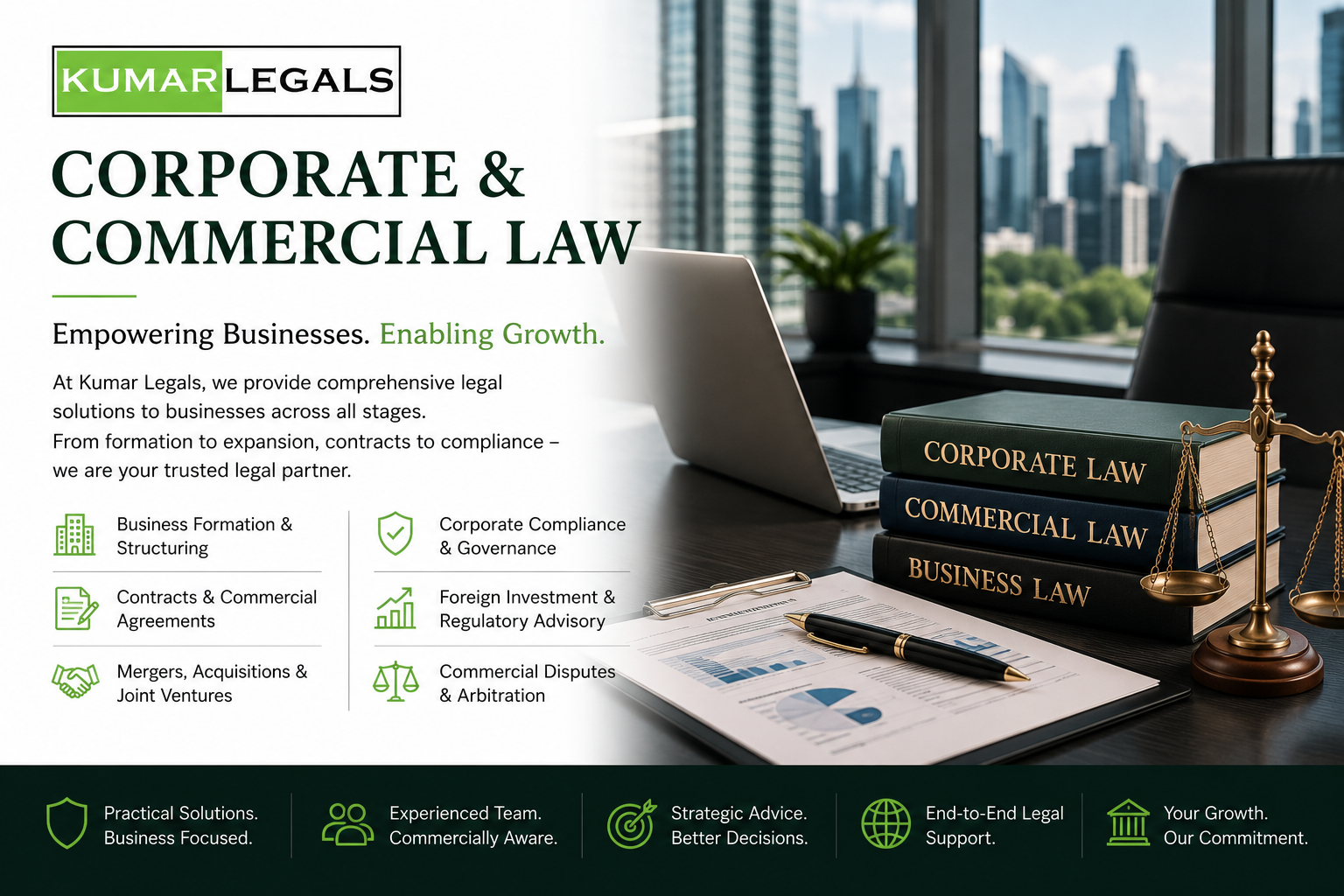
Corporate and commercial law governs the formation, management and regulation of companies, limited liability partnerships (LLPs), partnerships and other business entities. It also deals with commercial transactions, contractual relationships, regulatory compliance, corporate governance and dispute resolution arising in the course of business activities.
Businesses are required to comply with various statutory obligations under the Companies Act, 2013, the Limited Liability Partnership Act, 2008 and other applicable commercial laws. Legal issues may arise during incorporation, shareholder disputes, board management, commercial agreements, mergers and acquisitions, regulatory compliance, business restructuring, recovery of commercial dues and corporate governance matters.
Kumar Legals provides legal assistance relating to corporate, commercial and business law matters before the competent authorities, tribunals and courts in Mangalore and Dakshina Kannada, subject to the facts of each matter and the applicable law.
Corporate & Commercial Law Topics
Corporate law encompasses a wide range of legal services relating to businesses, companies and commercial transactions. The following articles explain these topics in greater detail.
-
🏢 Company Incorporation
General overview of incorporating private limited companies, public companies and other business entities. -
🤝 Shareholder & Partnership Disputes
General information regarding disputes between shareholders, partners and business associates. -
📑 Commercial Contracts & Agreements
General overview of drafting, reviewing and interpreting commercial agreements and business contracts. -
📋 Corporate Compliance
Understanding statutory compliance requirements applicable to companies and LLPs. -
🏛️ Directors' Duties & Responsibilities
General information regarding the legal responsibilities and obligations of company directors. -
💼 Limited Liability Partnerships (LLPs)
Overview of LLP formation, management, statutory obligations and legal issues. -
📈 Mergers & Acquisitions
General overview of business acquisitions, mergers and corporate restructuring. -
💳 Commercial Recovery Proceedings
General information regarding recovery of commercial dues arising from business transactions. -
⚖️ Company Law Disputes
Overview of disputes relating to oppression, mismanagement and other company law issues. -
🚀 Startup Legal Compliance
General information regarding legal considerations for startups, founders and growing businesses.
Related Articles
Each of the above topics is discussed separately through detailed articles explaining the legal framework, statutory requirements, corporate governance principles and frequently asked questions. The information provided is intended solely for general educational purposes and should not be construed as legal, financial or business advice.
 Corporate & Commercial Law">
Motor Accident Insurance Claims
Motor Accident Claims (MACT)
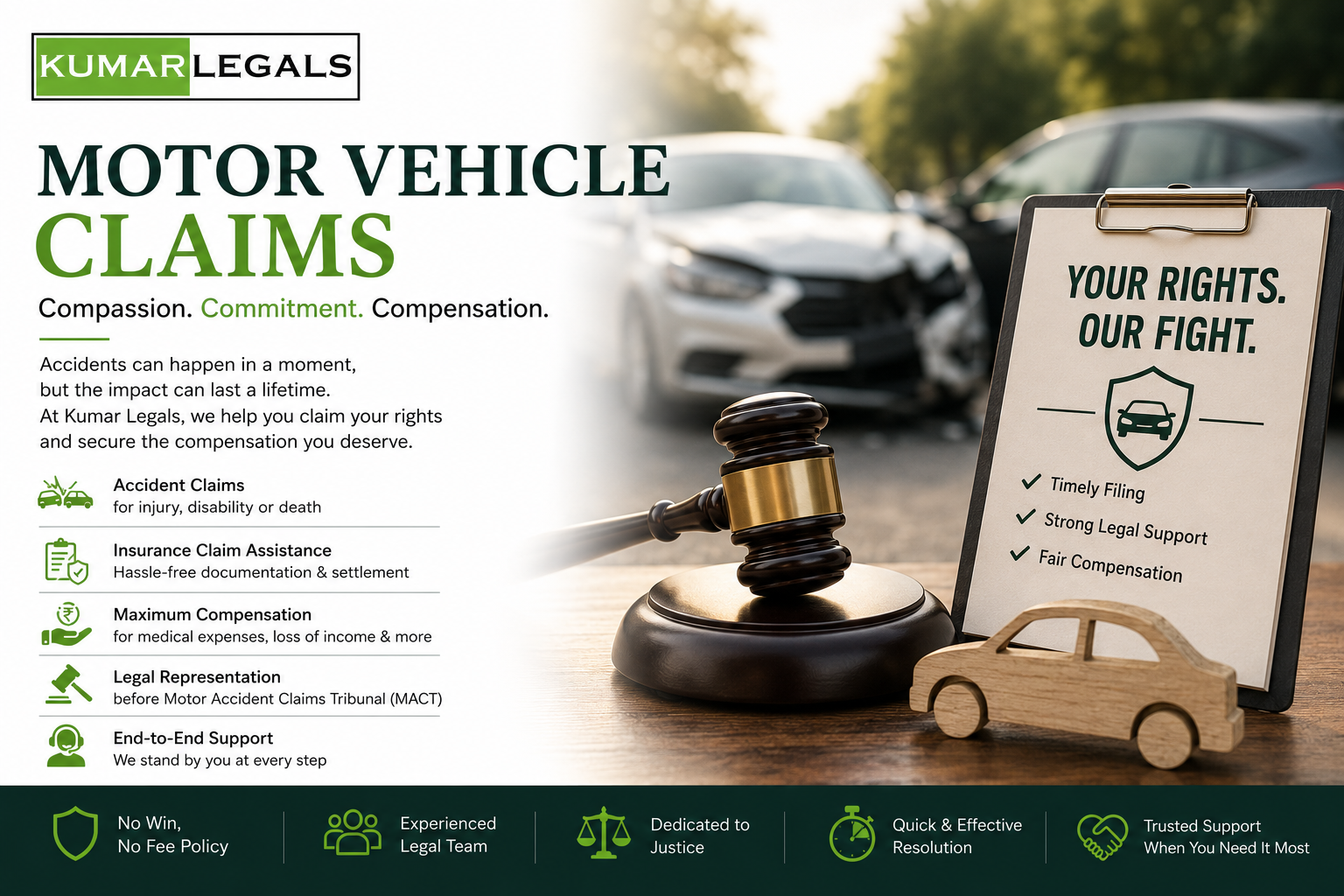
Motor accident claims arise when an individual suffers death, bodily injury or property damage as a result of a motor vehicle accident. The Motor Vehicles Act, 1988 provides a legal framework for claiming compensation before the Motor Accident Claims Tribunal (MACT), subject to the facts of each case and the applicable provisions of law.
Claims may arise from accidents involving cars, motorcycles, buses, trucks, auto-rickshaws, commercial vehicles and other motor vehicles. Depending upon the circumstances, compensation may be sought for medical expenses, loss of income, permanent disability, pain and suffering, damage to property, loss of dependency and other legally recognised heads of compensation.
Kumar Legals provides legal assistance relating to motor accident compensation claims before the competent Motor Accident Claims Tribunal (MACT) and other appropriate forums in Mangalore and Dakshina Kannada, subject to the facts of each matter and the applicable law.
Motor Accident Claim Topics
Motor accident compensation law covers various legal issues relating to road traffic accidents, insurance claims and compensation proceedings. The following articles provide general information on important topics.
-
🚗 What is a Motor Accident Claim?
General overview of compensation claims arising from motor vehicle accidents under Indian law. -
⚖️ Procedure before the Motor Accident Claims Tribunal (MACT)
General explanation of the procedure followed before the MACT for compensation claims. -
🏥 Medical Expenses & Treatment Costs
General information regarding claims for hospital expenses, treatment costs and rehabilitation. -
🩺 Permanent Disability Compensation
Overview of compensation relating to permanent disability and its impact on earning capacity. -
👨👩👧 Fatal Accident Compensation
General information regarding compensation claims arising from fatal road traffic accidents. -
🛡️ Motor Insurance Claims
Understanding insurance coverage, third-party liability and related compensation claims. -
📄 Documents Required for a Motor Accident Claim
General overview of the documents commonly required for compensation proceedings. -
📑 How Compensation is Generally Assessed
An overview of the factors considered while determining compensation in appropriate cases. -
🚑 Hit and Run Accident Claims
General information regarding statutory compensation available in hit-and-run accident cases. -
🏛️ Appeals in Motor Accident Cases
Overview of appellate remedies available against awards passed by the Motor Accident Claims Tribunal.
Related Articles
Each of the above topics is discussed separately through detailed articles explaining the legal framework governing motor accident claims, compensation principles, procedural requirements and commonly asked questions. The information is intended solely for general educational purposes and should not be construed as legal advice or as a guarantee of any particular outcome.
Arbitration & Alternative Dispute R
Arbitration & Alternative Dispute Resolution (ADR)
Alternative Dispute Resolution (ADR) provides mechanisms for resolving disputes outside the conventional court system. Arbitration, mediation, conciliation and negotiation are recognised methods of dispute resolution that may offer an efficient and structured process, depending upon the agreement between the parties and the applicable law.
Commercial disputes, contractual disagreements, construction disputes, partnership conflicts and other civil or business-related matters may, in appropriate circumstances, be resolved through arbitration or other ADR mechanisms. The Arbitration and Conciliation Act, 1996 provides the legal framework governing arbitration and conciliation in India.
Kumar Legals provides legal assistance relating to arbitration proceedings, mediation, conciliation and other dispute resolution mechanisms before the appropriate authorities, arbitral tribunals and courts, subject to the facts of each matter and the applicable law.
Arbitration & ADR Topics
- ⚖️ What is Arbitration?
General overview of arbitration and its role in resolving disputes. - 🤝 Mediation
General information regarding mediation and amicable settlement of disputes. - 📜 Conciliation
Overview of conciliation proceedings under Indian law. - 📄 Arbitration Agreements
Understanding arbitration clauses and agreements in commercial contracts. - 🏢 Commercial Arbitration
General information regarding arbitration arising from commercial disputes. - 🌍 International Commercial Arbitration
Overview of international arbitration involving cross-border commercial disputes. - 📑 Arbitral Awards
General explanation of arbitral awards and their enforcement. - 🏛️ Challenge to Arbitral Awards
Overview of statutory remedies available in relation to arbitral awards.
Related Articles
Each of the above topics is discussed through dedicated articles explaining arbitration law, mediation, conciliation, procedural requirements and frequently asked questions. The information is intended solely for general educational purposes and should not be construed as legal advice or a guarantee of any particular outcome.
Arbitration & Alternative Dispute R">
Medical Negligence & Healthcare Disputes
Medical negligence refers to situations where a patient alleges that injury, loss or damage has resulted from a failure to exercise the standard of care reasonably expected from a medical professional or healthcare institution. Depending upon the facts of each case, disputes may involve hospitals, doctors, surgeons, diagnostic centres, nursing homes or other healthcare providers. The determination of negligence depends upon medical evidence, expert opinion and the applicable legal principles.
Medical negligence matters may arise from delayed diagnosis, incorrect treatment, surgical complications, medication errors, lack of informed consent, birth-related injuries, diagnostic failures or other healthcare issues. Legal remedies, where available, depend upon the facts of the case and may be pursued before the appropriate Consumer Commission, Civil Court, Criminal Court or other competent authority, as permitted by law.
Kumar Legals provides legal assistance relating to medical negligence and healthcare disputes before the competent courts and statutory forums in Mangalore and Dakshina Kannada, subject to the facts of each matter and the applicable law.
Medical Negligence Topics
The following topics provide general information on different aspects of medical negligence law. Each subject links to a detailed article explaining the legal framework, procedure and commonly asked questions.
-
🏥 What is Medical Negligence?
General overview of medical negligence, the standard of care and the legal principles governing such claims.
-
⚕️ Doctor Negligence
General information relating to allegations of negligent diagnosis, treatment or professional care.
-
🏨 Hospital Negligence
Overview of disputes involving hospitals, nursing homes and healthcare institutions.
-
🔬 Diagnostic Errors & Delayed Diagnosis
General information regarding incorrect diagnosis, delayed diagnosis and related legal issues.
-
🩺 Surgical Negligence
General overview of legal issues arising from alleged surgical errors and post-operative complications.
-
💊 Medication Errors
General information regarding prescription mistakes, dosage errors and medication-related disputes.
-
📄 Informed Consent
Understanding the legal significance of informed consent before medical treatment and surgical procedures.
-
👶 Birth Injury & Maternity Negligence
General overview of disputes arising from pregnancy, childbirth and neonatal care.
-
⚖️ Medical Negligence before Consumer Commissions
General information regarding consumer proceedings in appropriate medical negligence cases.
-
📑 Documents & Medical Records
Overview of medical records, prescriptions, investigation reports and other documents commonly relevant in healthcare disputes.
Related Articles
Each of the above topics is discussed separately through detailed articles explaining the applicable legal framework, judicial principles, procedural aspects and frequently asked questions relating to medical negligence and healthcare disputes. The information is intended solely for general educational purposes and should not be construed as legal advice or a guarantee of any legal outcome.
Learn More
Medical Negligence & Healthcare Disputes
Medical negligence refers to situations where a patient alleges that injury, loss or damage has resulted from a failure to exercise the standard of care reasonably expected from a medical professional or healthcare institution. Depending upon the facts of each case, disputes may involve hospitals, doctors, surgeons, diagnostic centres, nursing homes or other healthcare providers. The determination of negligence depends upon medical evidence, expert opinion and the applicable legal principles.
Medical negligence matters may arise from delayed diagnosis, incorrect treatment, surgical complications, medication errors, lack of informed consent, birth-related injuries, diagnostic failures or other healthcare issues. Legal remedies, where available, depend upon the facts of the case and may be pursued before the appropriate Consumer Commission, Civil Court, Criminal Court or other competent authority, as permitted by law.
Kumar Legals provides legal assistance relating to medical negligence and healthcare disputes before the competent courts and statutory forums in Mangalore and Dakshina Kannada, subject to the facts of each matter and the applicable law.
Medical Negligence Topics
The following topics provide general information on different aspects of medical negligence law. Each subject links to a detailed article explaining the legal framework, procedure and commonly asked questions.
-
🏥 What is Medical Negligence?
General overview of medical negligence, the standard of care and the legal principles governing such claims.
-
⚕️ Doctor Negligence
General information relating to allegations of negligent diagnosis, treatment or professional care.
-
🏨 Hospital Negligence
Overview of disputes involving hospitals, nursing homes and healthcare institutions.
-
🔬 Diagnostic Errors & Delayed Diagnosis
General information regarding incorrect diagnosis, delayed diagnosis and related legal issues.
-
🩺 Surgical Negligence
General overview of legal issues arising from alleged surgical errors and post-operative complications.
-
💊 Medication Errors
General information regarding prescription mistakes, dosage errors and medication-related disputes.
-
📄 Informed Consent
Understanding the legal significance of informed consent before medical treatment and surgical procedures.
-
👶 Birth Injury & Maternity Negligence
General overview of disputes arising from pregnancy, childbirth and neonatal care.
-
⚖️ Medical Negligence before Consumer Commissions
General information regarding consumer proceedings in appropriate medical negligence cases.
-
📑 Documents & Medical Records
Overview of medical records, prescriptions, investigation reports and other documents commonly relevant in healthcare disputes.
Related Articles
Each of the above topics is discussed separately through detailed articles explaining the applicable legal framework, judicial principles, procedural aspects and frequently asked questions relating to medical negligence and healthcare disputes. The information is intended solely for general educational purposes and should not be construed as legal advice or a guarantee of any legal outcome.
Learn More
Medical Negligence & Healthcare Disputes
Medical negligence refers to situations where a patient alleges that injury, loss or damage has resulted from a failure to exercise the standard of care reasonably expected from a medical professional or healthcare institution. Depending upon the facts of each case, disputes may involve hospitals, doctors, surgeons, diagnostic centres, nursing homes or other healthcare providers. The determination of negligence depends upon medical evidence, expert opinion and the applicable legal principles.
Medical negligence matters may arise from delayed diagnosis, incorrect treatment, surgical complications, medication errors, lack of informed consent, birth-related injuries, diagnostic failures or other healthcare issues. Legal remedies, where available, depend upon the facts of the case and may be pursued before the appropriate Consumer Commission, Civil Court, Criminal Court or other competent authority, as permitted by law.
Kumar Legals provides legal assistance relating to medical negligence and healthcare disputes before the competent courts and statutory forums in Mangalore and Dakshina Kannada, subject to the facts of each matter and the applicable law.
Medical Negligence Topics
The following topics provide general information on different aspects of medical negligence law. Each subject links to a detailed article explaining the legal framework, procedure and commonly asked questions.
-
🏥 What is Medical Negligence?
General overview of medical negligence, the standard of care and the legal principles governing such claims. -
⚕️ Doctor Negligence
General information relating to allegations of negligent diagnosis, treatment or professional care. -
🏨 Hospital Negligence
Overview of disputes involving hospitals, nursing homes and healthcare institutions. -
🔬 Diagnostic Errors & Delayed Diagnosis
General information regarding incorrect diagnosis, delayed diagnosis and related legal issues. -
🩺 Surgical Negligence
General overview of legal issues arising from alleged surgical errors and post-operative complications. -
💊 Medication Errors
General information regarding prescription mistakes, dosage errors and medication-related disputes. -
📄 Informed Consent
Understanding the legal significance of informed consent before medical treatment and surgical procedures. -
👶 Birth Injury & Maternity Negligence
General overview of disputes arising from pregnancy, childbirth and neonatal care. -
⚖️ Medical Negligence before Consumer Commissions
General information regarding consumer proceedings in appropriate medical negligence cases. -
📑 Documents & Medical Records
Overview of medical records, prescriptions, investigation reports and other documents commonly relevant in healthcare disputes.
Related Articles
Each of the above topics is discussed separately through detailed articles explaining the applicable legal framework, judicial principles, procedural aspects and frequently asked questions relating to medical negligence and healthcare disputes. The information is intended solely for general educational purposes and should not be construed as legal advice or a guarantee of any legal outcome.
Not Sure Which Practice Area Fits Your Case?
Reach out for a brief consultation — we'll help identify the right legal path forward.